choreographic interfaces
|
movement languages at home
tools & methods
Speculative Design
Embodied prototyping
Prototyping (P5js)
Workshop planning & facillitation
collaboration with
Professional dancers
IKEA Home Smart team
Dancers in academia
background
How might we use choreographic approaches & dancing in the design process; to empower and elevate personal movement languages in conversation with digital devices in the home?


Growing up we move and play all the time, however at a certain point we are told our bodies are awkvard end we seldom explore playful ways we could move. In addition to this we move through and with an increasing number of digital devices at home which mostly based on us adapting to the technology making us more still sitting than ever. By involving dancers and learning from choreographic approaches in the design process, this project aims to start from the body, to achieve more humanistic and playful interactions based on our personal ways of moving.
outcome
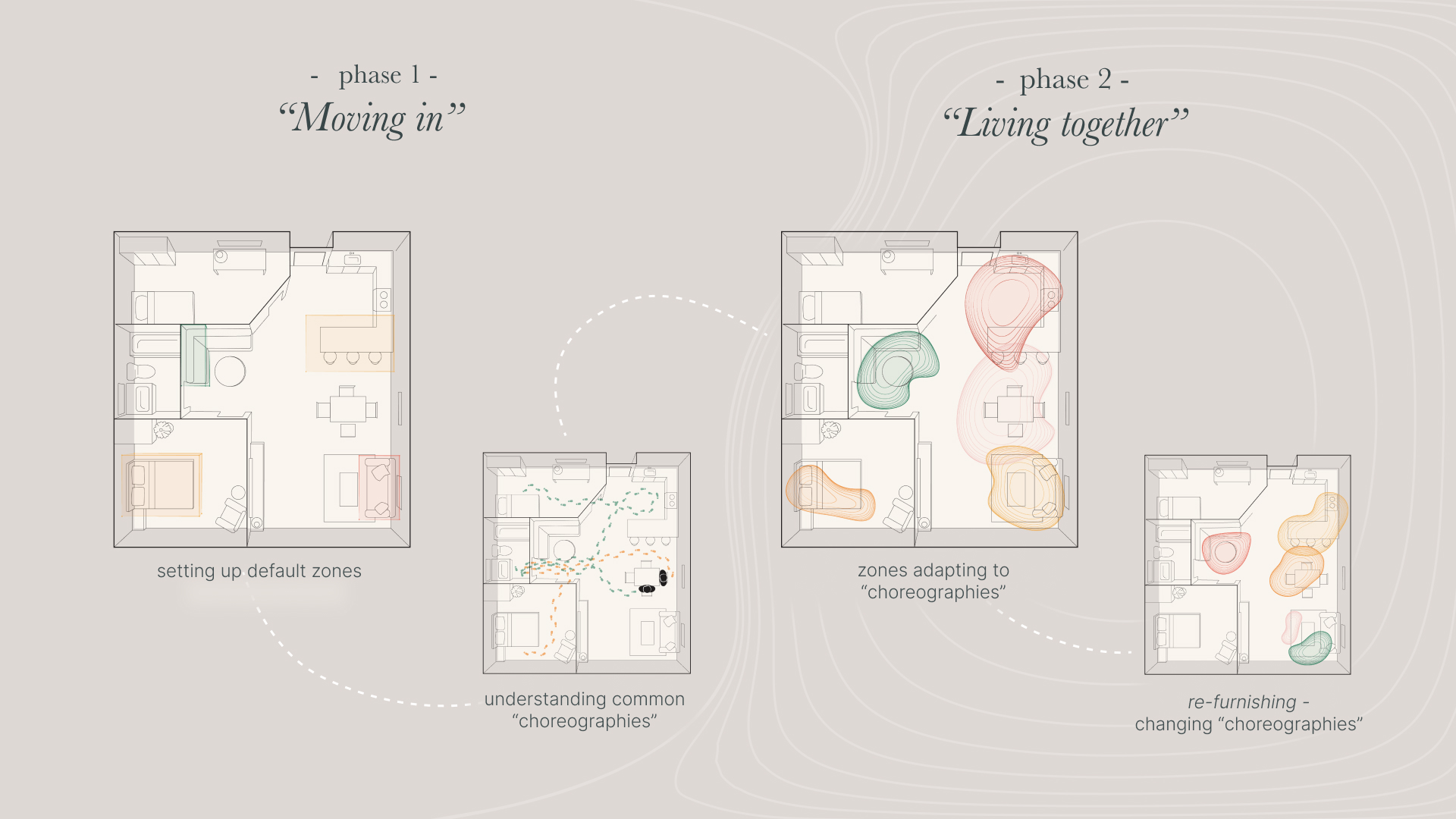
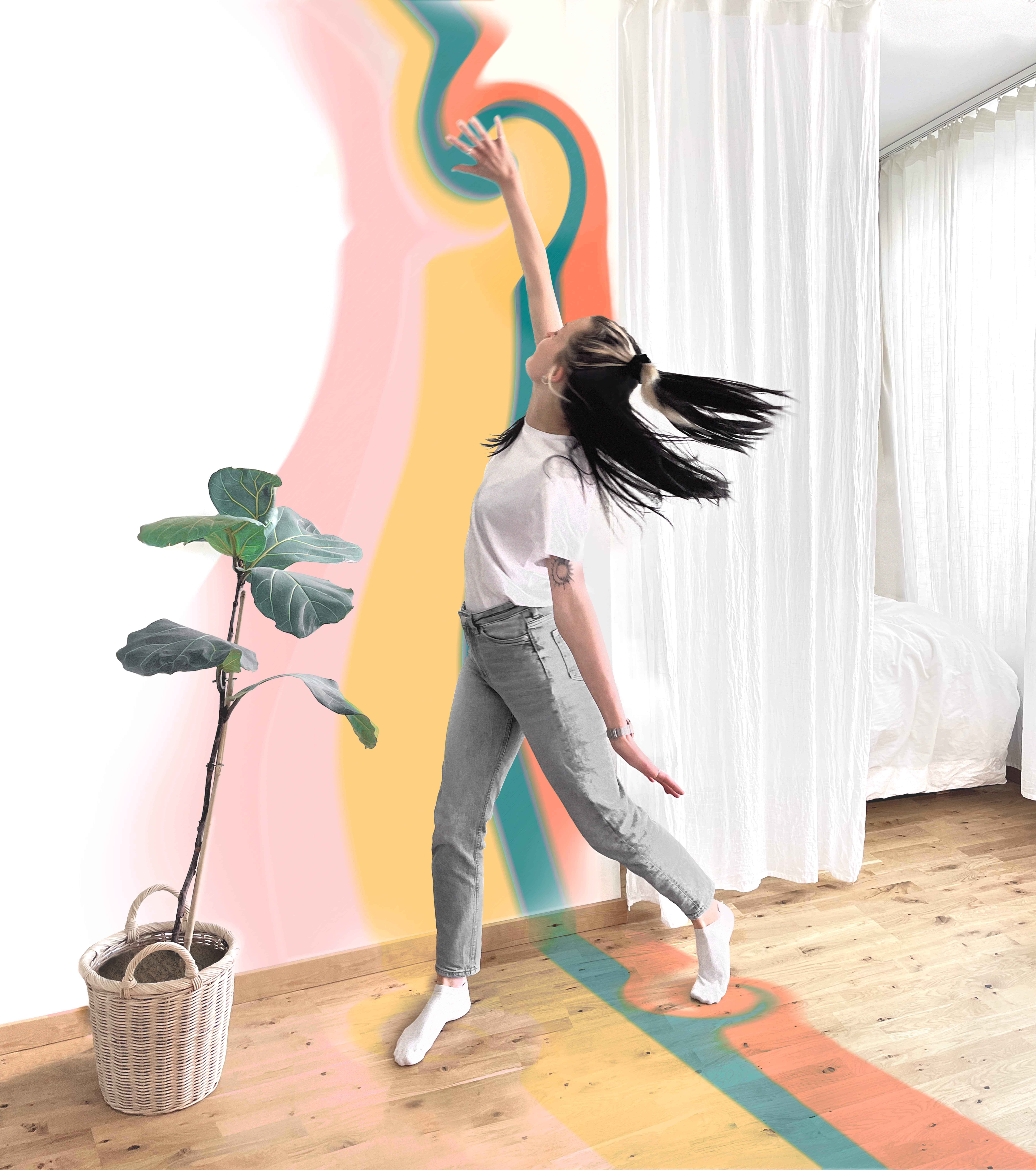
The outcome proposes a “Choreographic Interface” which, manifests itself in contextual zones, reflecting the “choreographies” and routines that naturally develop over time in our homes. The interface, in different ways, encourages & elevates personal movement languages by visualising moments for movement in our everyday lives to elicit joy, play, and wellbeing. The suggestion is a shift away from designers creating each interaction and the users adapting to them – to instead, suggest that designers might create the tools to empower users in utilising their personal ways of moving.

02/03

conceptual outcome

imagine your home...

The final concept By learning from how people move at home during different hours, a system is created and manifested in contextual zones – reflecting the “choreographies” and routines that naturally develop over time when people live together. While moving through t

As life goes on the zones change over time as the system learns the behaviour of the people living in it.

What if we redefined what kind of needs digital devices in our homes should cater to?

What if, instead of practical and conventional, they encouraged us move throughout the day in unexpected fun ways?

01

What if your home turned into a place of discovery and exploring?

02

What if your home could supporting you in your routines by creating an calming oasis for meditation?

03

What if your home could invite you to a dance and encourage your to move in fun ways to boost your mood inbetween online meetings.

04

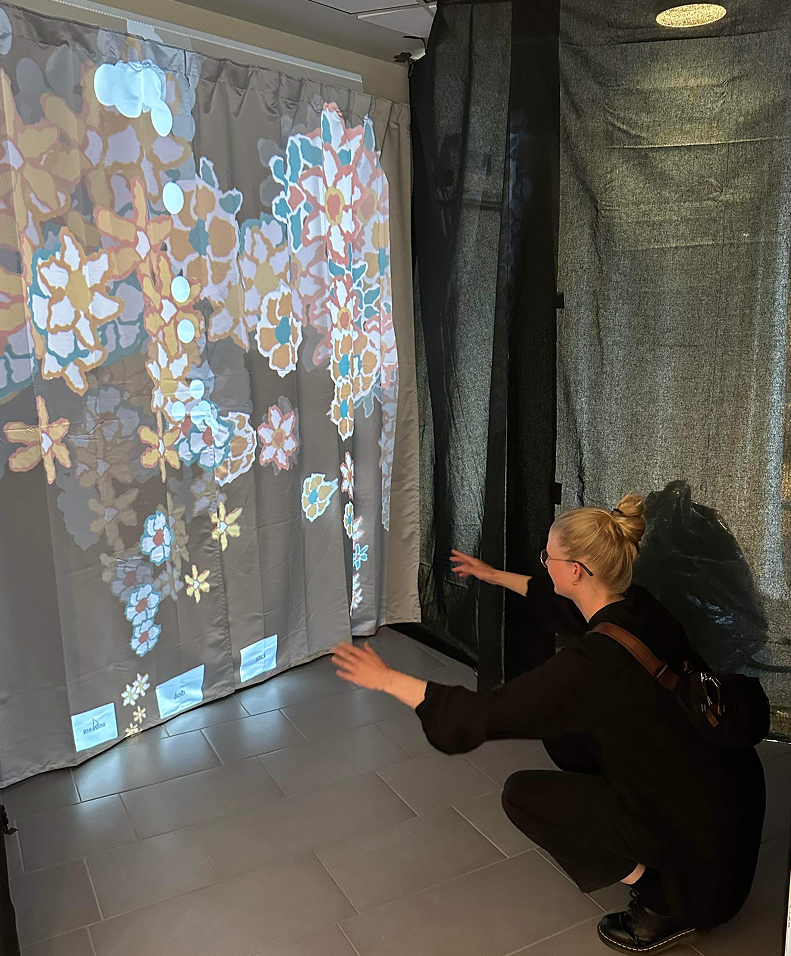
What if the first thing you did in the morning was to paint your walls in flowers, supporting you in waking up?

This project does not aim to propose one specific use, rather inspire to how we might incorporate playful movement in our everyday lives.
02/03

background

Why does it feel so awkward to move?

We increasingly move through the world in constant interaction with technology—held in our hands, embedded in our surroundings. Yet most digital interfaces still rely on a narrow range of gestures like swiping and tapping, failing to recognize the body as a whole.

When interfaces are designed without fully considering the human body, we adapt our movements to the device, not the other way around—resulting in technology-driven rather than human-centered design.

This is where dance comes in. Dancers are experts in using their bodies to express emotion and intent. By collaborating with dancers and drawing on their embodied knowledge, interaction designers can explore new possibilities for how movement and technology could exist in our everyday lives.

Products choreograph the way we move at home

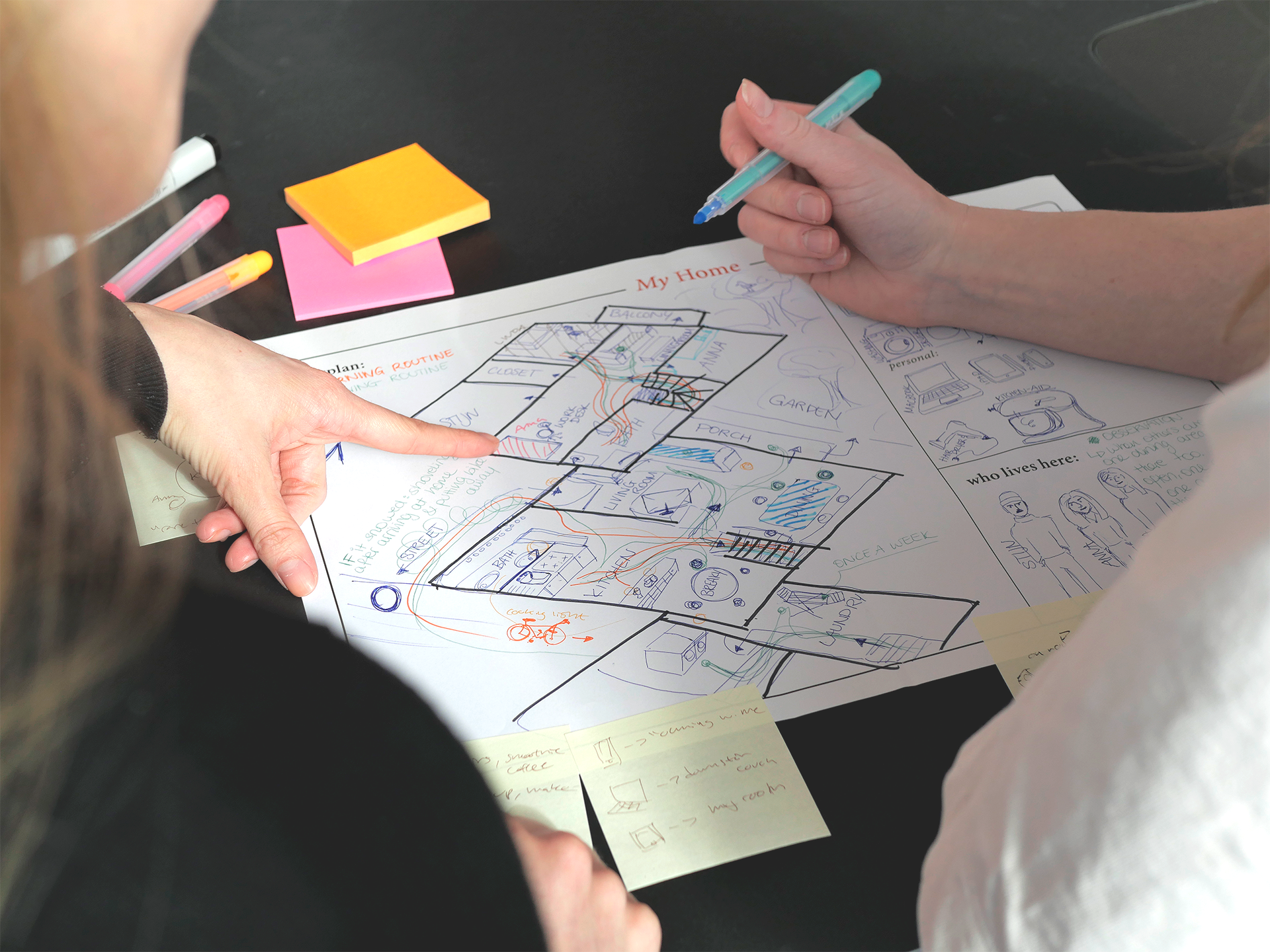
Taking inspiration from unspoken choreographies at home

People naturally develop unspoken routines—"choreographies"—as they adapt to living with others. These shared patterns of movement, from kitchen habits to lighting rituals, reveal how we negotiate space and intention without words.

This observation inspired me to reflect on our co-existence with digital devices. What if we designed technology that adapts to our natural, bodily behaviors—just as we do with each other—rather than forcing us to adapt to screens and gestures designed without the full body in mind?

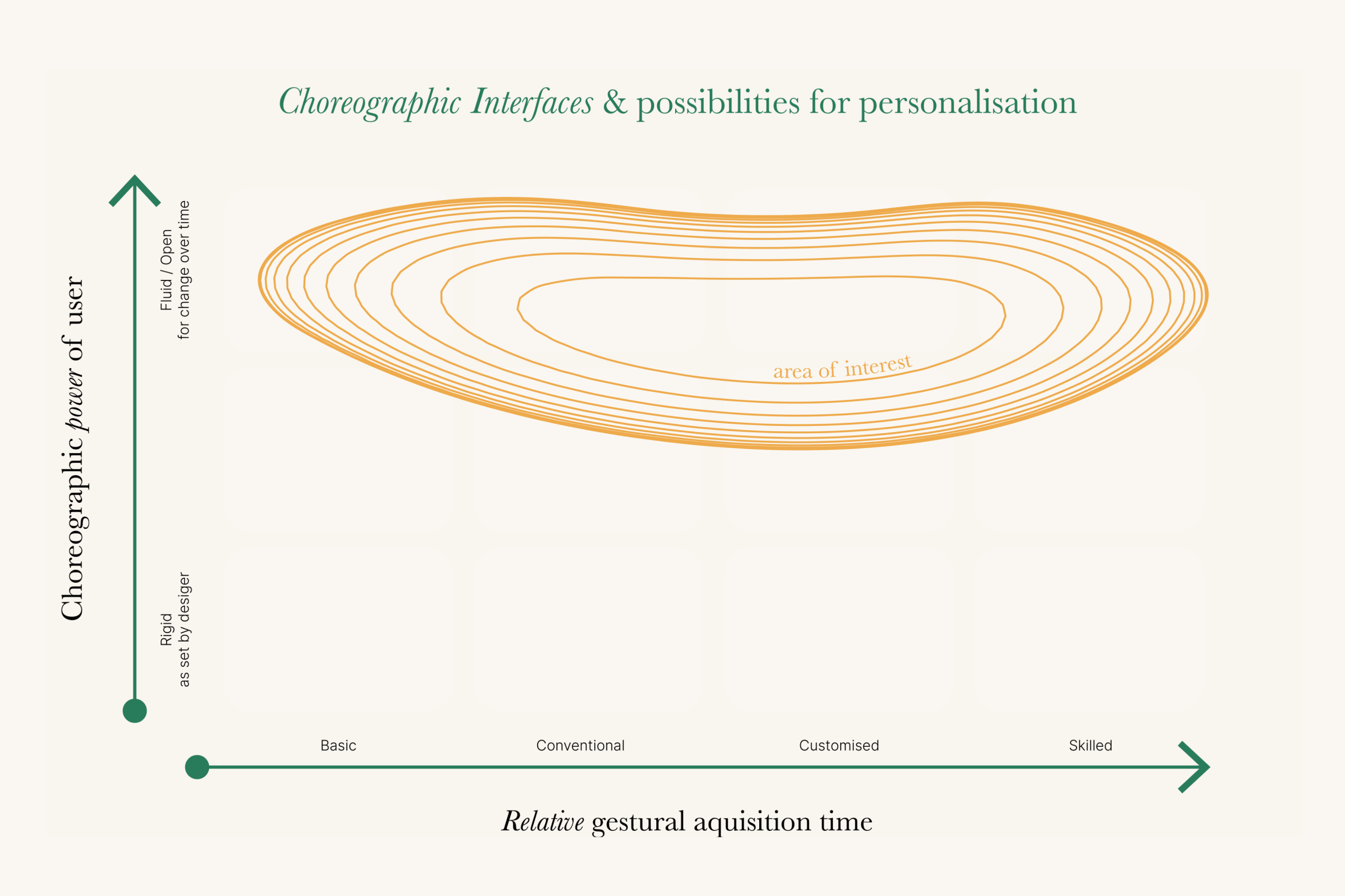
Defining a framework for types of movement

When we design for movement, we often think of universal movement languages—but everyone's movement language is individual. Movement is contextual and cultural.

As a designer, I aim to celebrate people's individual ways of moving rather than designing a movement to mean a specific thing. To evaluate the concepts and ensure I met this requirement, I developed a framework.

I discovered that feedback on movement makes people dare to move in more creative and playful ways. Knowing that you're supposed to move in the presence of the prototype removed one layer of awkwardness, replaced with curiosity: Would it still track if I crawled on the floor?

key insight:
Reult fromprototypes: feedback makes people move in unexpected ways. “will it still work if I crawl on the floor”

Changing, contextual movement zones at home

The visual feedback affects what kind of movements we do. The more abstracted (less human-like) the feedback, the more brave and less self-aware we become in our movements.

02/03

presenting the project

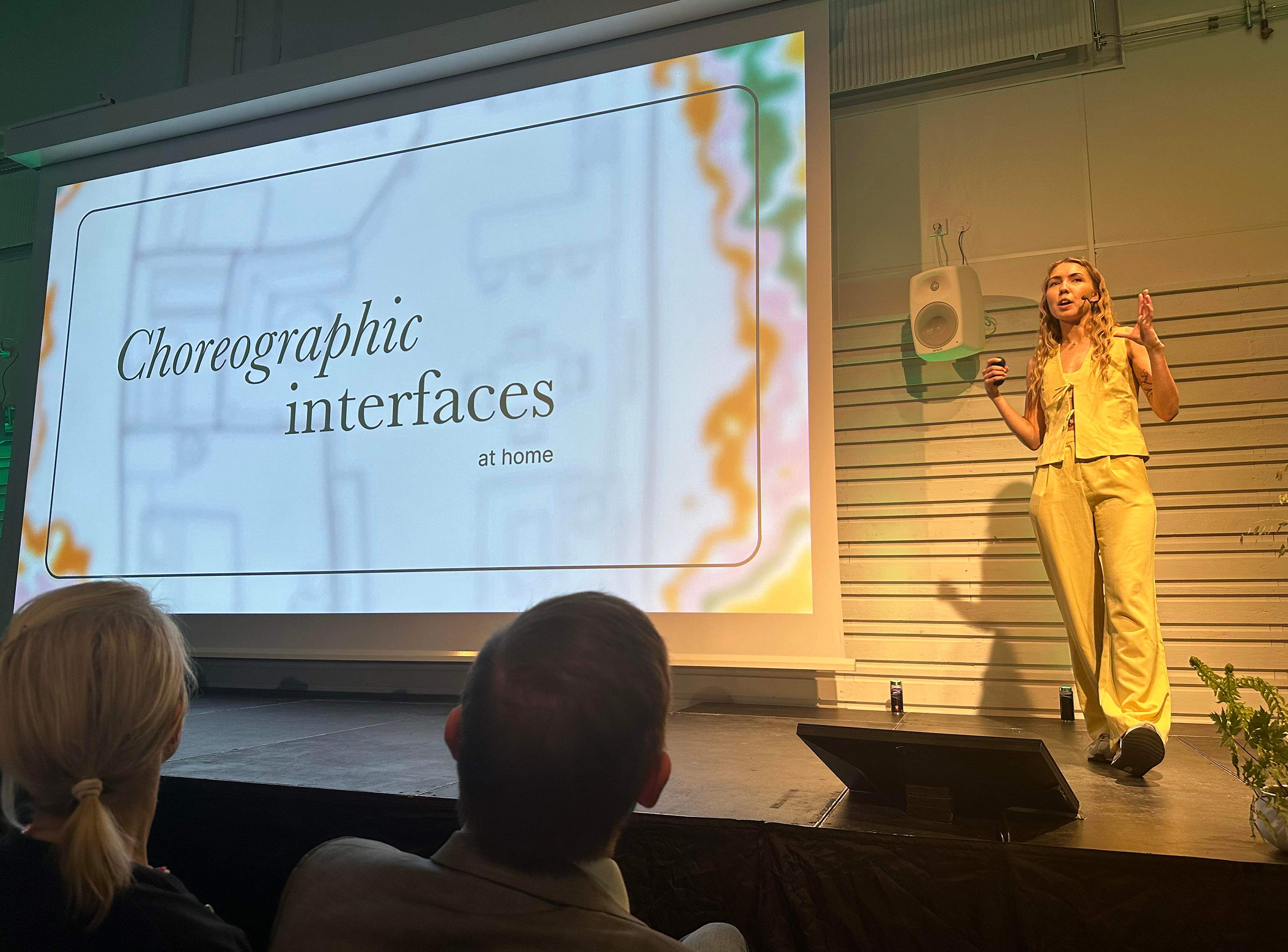
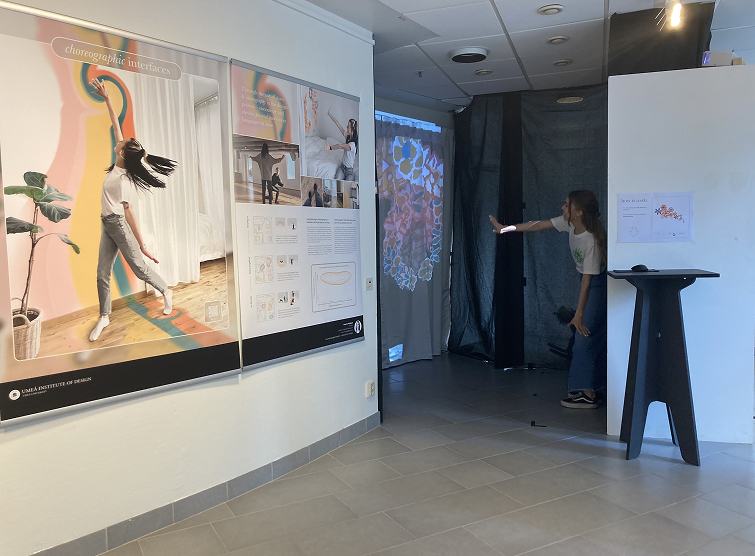
UID23 Degree Show

I set up the last prototype as a proof of concept to see how people at the exhibition would react. The visitors could try different visualisation patterns reflecting their movements and afterward, some people shared their thoughts. What stood out the most was that a lot of people could understand the concept and then think of how they would apply it in their lives – beyond the ideas I presented. For example, as an aid while working out, how it might be fun to use getting home with your friends after a night of partying, or in play with one’s kids.

Learnings & Retrospective

From Brief to Final Concept
This project began with the idea of using dance to create more human-centered products. I questioned how today's technology often ignores the body, forcing users to adapt to devices rather than the other way around. As the project evolved, I shifted focus from designing a "universal" movement language to empowering personal movement at home. The final concept is a system that offers visual feedback on movements, allowing people to shape their space through everyday "choreographies."

Using Dance in the Process
My dance background was crucial for planning workshops and connecting with participants. Choreographic thinking helped me explore how people relate to space, products, and each other. Although dancers mainly supported my ideas, I realized how valuable it would be to involve them as co-creators from the start.

Learnings as an Interaction Designer
Managing the project deepened my confidence in leading collaborations and exploring new methods. Revisiting my past as a dancer turned into a strength, giving me tools for more embodied, playful design approaches. Prototyping simple, testable ideas taught me to build rather than overthink, and working with passionate people reminded me how creativity thrives through collaboration.

Why It’s Relevant
I propose "Open/Fluid Choreographic Interfaces" that empower users’ own ways of moving, rather than enforcing global gesture standards. Designing for evolving personal movement languages invites richer, more inclusive interactions. This project shows the value of involving dancers in the design process and highlights the need for technologies that adapt to us—not the other way around.

←  previous project

next project  →